Fast, Reliable Attic Insulation Across Trabuco Canyon
Attic insulation in Trabuco Canyon costs between $1,800 and $7,500 for a typical single-family home, with radiant barrier installation adding $1,200 to $3,200 depending on attic square footage. Most projects are completed in one day. Call us at (844) 820-1136 for a free estimate, and we’ll send a specialist who actually knows Trabuco Canyon homes, not a generic technician with a truck.
We work across 92678 and 92679, from the canyon roads off Live Oak Canyon Road to the foothill lots near Robinson Ranch. Homes here sit in a different world than coastal Orange County. The air is drier, the nights drop harder, and Santa Ana winds push attics to their limits. That’s exactly the kind of environment where insulation either does its job or quietly fails while utility bills climb.
Why Homestead Insulation Co Is Trabuco Canyon’s Preferred Attic Insulation Company
Homestead Insulation Co is an insulation-only contractor. We don’t roof houses, we don’t run HVAC calls, and we don’t split our crews between five different trades. Attic Insulation is what we do, every day, in attics across Trabuco Canyon. Alan Brecker runs our team with a simple rule: match the material to the house, not the house to whatever is in stock.
That rule matters more in Trabuco Canyon than almost anywhere else in the county. This is a community where half the homes on a given street might be original 1970s ranch construction while the house next door is a post-2007 rebuild with modern WUI code requirements. A contractor who treats every attic the same will miss the fire-rated baffle issue on one house and over-insulate the newer one. We don’t.
We carry products from Owens Corning, Johns Manville, Knauf, and Rockwool. That’s not a brag, it’s a necessity. Between the wildfire rebuild requirements, the pest pressure from rural canyon lots, and the diurnal temperature swings that punish the wrong material, one brand can’t serve every home here.
Radiant Barrier in Trabuco Canyon
Radiant Barrier in Trabuco Canyon homes is a foil-faced material installed on the underside of roof rafters that reflects radiant heat before it saturates your insulation and pushes attic temperatures past 140 degrees in July. When we install it in a 92678 home on a south-facing canyon slope, we’re not adding insulation, we’re deflecting heat the way a shade tree does, but inside the attic envelope.
This is one of the highest-impact upgrades for Trabuco Canyon specifically. Diurnal temperature swings mean your attic might be 45 degrees at 5 a.m. and 135 degrees by 2 p.m. Radiant barrier slows that heat gain, which reduces the load on your AC and extends the life of whatever insulation sits below it. The degradation pattern we see here is specific to the canyon: intense heat cycling causes facing to delaminate faster than in coastal cities, so we inspect existing barrier for wrinkle, peel, and lose of reflectivity before we layer on anything new.
Attic temperature stabilization during Santa Ana events
Santa Ana winds don’t just stoke fire risk, they create attic heat spikes that run through the night. A radiant barrier installed across the rafter bays reduces heat migration into the conditioned space during those events. We’ve had Trabuco Canyon customers report AC systems cycling off noticeably more often after we added barrier to their existing blown-in cellulose.
Fire-resilient radiant barrier selection
Given local WUI codes, we recommend a radiant barrier that is rated for use in conjunction with fire-resistant materials. This isn’t something every installer checks. In Trabuco Canyon, it matters.
Expect to pay $1,200 to $3,200 for radiant barrier in a typical 92678 or 92679 attic, depending on access and rafter complexity. Homes with steep vaulted ceilings or complex roof lines run higher.
Attic Cleaning Services in Trabuco Canyon
Attic Cleaning Services in Trabuco Canyon homes matter because rural canyon lots bring real consequences. Rodents, rats, and roof-rats in particular, work their way into attics through unsealed soffit gaps, chew wiring, compress batts, and contaminate insulation with nesting waste. The smell alone crosses into the conditioned space. The bigger issue in Trabuco Canyon is that so many homes sit on septic rather than sewer systems, which brings pest populations closer to the house and raises the stakes for attic hygiene.
We do full removal of contaminated or deteriorated insulation, vacuum and sanitize the attic floor, inspect for entry points, and then reseal before installing fresh material. For homes on well and septic systems, we advise this be revisited any time you notice droppings, insulation compaction, or a stale smell coming from the ceiling registers.
Post-rodent remediation and insulation replacement
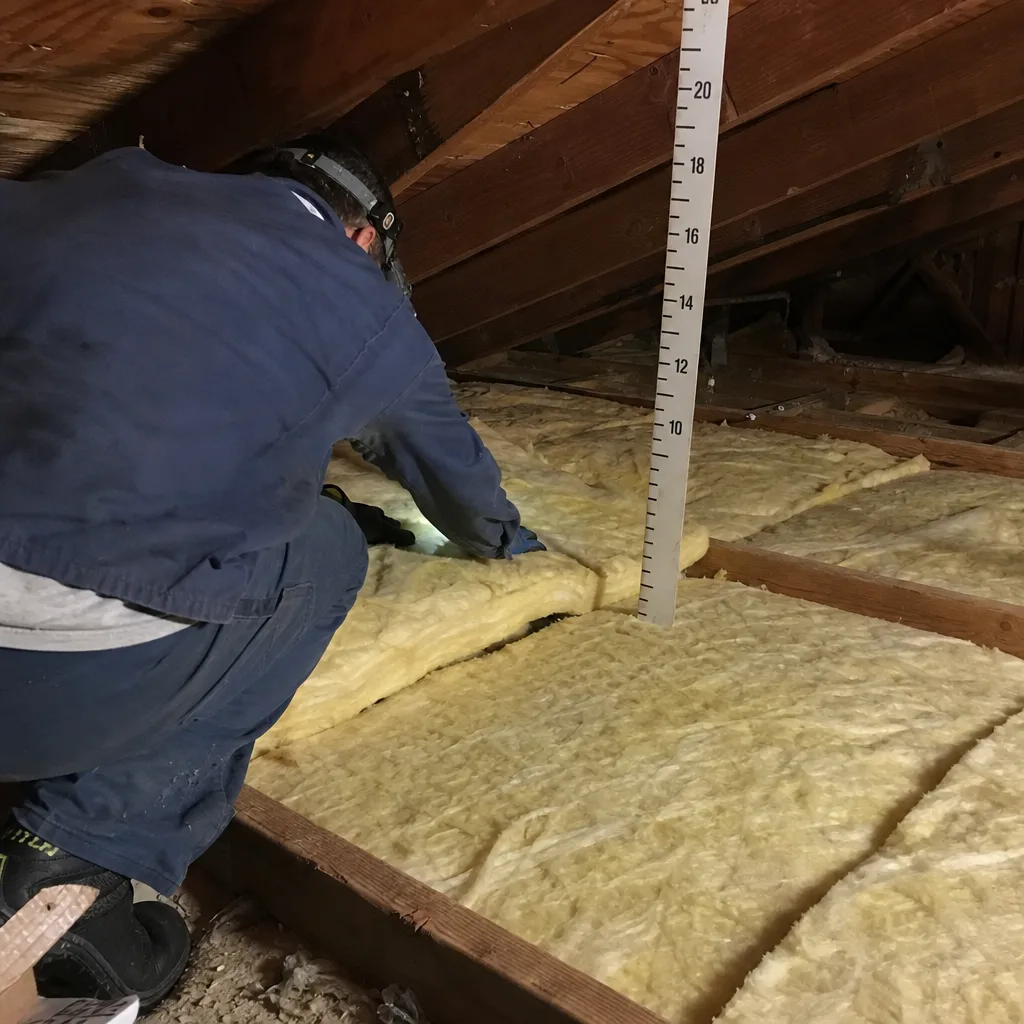
When rodents have been active in an attic, the contaminated insulation has to go before anything new goes in. We’ve cleaned attics off Trabuco Canyon Road where rats had tunneled through fiberglass batts. Vacuuming alone isn’t enough when material is compacted and soiled. We remove, sanitize, then re-insulate with a material chosen for your specific attic.
Attic baffle inspection and venting correction
Cleaning is the right moment to check baffles. Many older canyon homes have collapsed or missing baffles, which blocks soffit vent airflow and shortens insulation life. We inspect and correct during every cleaning. If the baffles aren’t right, the new insulation will underperform and you’ll pay for it in cooling season.
Attic cleaning in Trabuco Canyon typically runs $1,500 to $4,000 for full removal, sanitization, and disposal, with insulation replacement billed separately. Smaller jobs, cleaning only, start lower.
What happens when you call
- 1
A real person answersNo phone trees — you reach a local pro.
- 2
You get an upfront price rangeHonest numbers before anyone is dispatched.
- 3
A background-checked tech heads outLicensed & insured, dispatched right away.
- 4
You approve before work beginsNothing starts until you say go.
Trusted Brands We Service in Trabuco Canyon
Homestead is authorized to install Owens Corning and Johns Manville fiberglass systems, Knauf batts, and Rockwool mineral wool. For Trabuco Canyon specifically, Rockwool comes up often because of its mineral composition and fire-resistant properties. That’s the brand we reach for on post-fire rebuilds and homes in higher-severity wildfire zones. Johns Manville and Owens Corning stay in rotation for standard retrofit work where the homeowner’s priority is thermal performance at a lower cost per square foot. Because we install eight manufacturers’ products, we don’t need to push one brand onto a house that needs another.
Common Attic Insulation Problems We See in Trabuco Canyon Homes
- Degraded radiant barrier facing: Years of hot canyon summers and rapid night cooling cause the foil facing to wrinkle and separate from the substrate. Once that happens, reflectivity drops sharply and the attic heats up like there’s no barrier at all.
- Pest intrusion through soffit gaps: Rural lots with well water and septic systems experience more rodent pressure than suburban HOA tracts. Rats enter through unsealed soffit corners, tunnel through batts, and leave insulation compacted and contaminated.
- Inconsistent post-fire rebuild insulation: Homes rebuilt after the 2007 Santiago Fire often have modern wall assemblies but rushed attic work. We see missing fire-rated baffles, uneven blown-in depth, and fiberglass batts installed haphazardly over radiant barrier that was never taped at the seams.
- Thermal bridging in vaulted ceilings: Custom homes in 92679 often have complex rooflines with vaulted sections that were under-insulated at construction. Heat transfers through rafter bays into rooms below, making one bedroom hot while the rest of the house stays comfortable.
Pricing for Attic Insulation in Trabuco Canyon, CA
Attic insulation in Trabuco Canyon runs $1,800 to $7,500 for most single-family homes. Here’s a quick breakdown: blown-in cellulose runs $1.50 to $3.00 per square foot installed. Fiberglass batts run $1.80 to $3.50 per square foot. Rockwool mineral wool runs $2.50 to $4.50 per square foot. Radiant barrier adds $1,200 to $3,200 depending on roof complexity and access.
What you pay is driven by attic size, the material you choose, and whether we’re topping up existing insulation or removing it first. Homes with rodent damage or fire-damaged material need attic cleaning before anything fresh goes in. Call (844) 820-1136 for an exact quote at no cost.
We Also Serve Cities Near Trabuco Canyon
Our team covers Trabuco Canyon plus the surrounding foothill communities. You’ll see us regularly in Rancho Santa Margarita, Foothill Ranch, Portola Hills, and Coto De Caza. If you’re just outside the canyon proper, give us a call, we likely have a crew in your area this week.
Attic Insulation and Post-Fire Material Matching in Trabuco Canyon
Because many Trabuco Canyon homes were rebuilt after the 2007 Santiago Fire, attic insulation in the same neighborhood often mixes pre-fire fiberglass batts with post-fire non-combustible mineral wool, and the wildfire code-required ventilation pathways differ block to block. That makes material matching critical for both fire resilience and thermal performance.
We saw this firsthand on a post-fire rebuild in the Santiago Canyon Estates area off Live Oak Canyon Road. The original attic had a mix of compacted fiberglass batts and missing fire-rated baffles. We installed Rockwool mineral wool with a radiant barrier and corrected the soffit venting to meet WUI code, which stabilized attic temperatures during Santa Ana winds and brought the home into compliance with current fire standards. That kind of correction can’t happen if the contractor just drops a fresh layer over the old stuff.
For homeowners up and down Robinson Ranch, Trabuco Canyon Road, and Oso Parkway, this is the conversation we have again and again: figure out what’s already in the attic before deciding what goes on top of it. When the wrong material gets layered over the wrong substrate, you pay twice, once for the install and again for the fix.
Serving Trabuco Canyon, CA — Our Local Coverage Area
We’re based in the Trabuco Canyon area and know this community well. Use the map below to see our service coverage — if you’re nearby, we can almost certainly help.
FAQs About Attic Insulation in Trabuco Canyon
Yes, rebuilt homes must meet the wildfire building codes that went into effect after the Santiago Fire, which typically means fire-rated baffles, non-combustible cavity materials like Rockwool mineral wool, and specific venting depending on your WUI zone. Even if your rebuild passed inspection, we commonly find attics where those details were skimped or have deteriorated. If your home sits in 92678 or 92679 and you’re not sure what’s in the attic, call (844) 820-1136 and we’ll check.
A daily swing of 30 to 40 degrees between early morning and afternoon forces insulation to handle ongoing thermal cycling that coastal homes don’t experience. Over years, that cycling degrades some materials faster, particularly radiant barrier facing and loose-fill that settles. The right material choice for your specific attic, not just your climate zone, is what prevents premature failure. We spec materials for Trabuco Canyon heat cycling on every job.
Rockwool mineral wool is the best brand-level answer for pest resistance. Its dense, mineral composition doesn’t offer rodents the same nesting comfort as soft fiberglass batts or cellulose. That doesn’t mean it repels them, but combined with proper air sealing it eliminates the entry points and reduces the appeal that attracts nesting in the first place. For canyon lots with heavy pest pressure, we regularly recommend Rockwool over fiberglass.
Yes. In Trabuco Canyon’s summer heat, a radiant barrier installed on the underside of roof rafters can reduce attic temperatures by 20 to 30 degrees during peak afternoon hours. That lowers the heat load on your insulation and cuts cooling cost. We install radiant barrier as a standalone upgrade or alongside new insulation. Most homes see the fastest payback here compared to other Orange County cities because our cooling season runs long and hot.
Look for these signs: visible gray or black soot streaking on rafters above the insulation, inconsistent insulation depth across the attic floor, areas that look removed and poorly replaced, and any smell of smoke that lingers on hot days. If your home was in the fire zone but not fully rebuilt, smoke infiltration into attic cavities was common. We’ve corrected insulation in several Trabuco Canyon homes that never got a proper attic assessment after 2007. Call (844) 820-1136 for a no-cost inspection.
Written by Alan Brecker, Owner at Homestead Insulation Co, serving Trabuco Canyon and surrounding Orange County foothill communities.