Insulation Company in March Air Force Base, CA
Blown in insulation is the most common fix we recommend for March Air Force Base homes, and it usually comes down to one problem: mid-century military housing with paper-thin original attic insulation and a blazing Inland Empire sun hammering low-slope roofs from June through September. Homes here weren’t built for 105-degree summers, and the shallow base-era attics make loose-fill fiberglass or cellulose the practical answer instead of rolled batts. If your rooms heat up unevenly or your AC runs nonstop, call Homestead Insulation Co at (844) 820-1136 and we’ll diagnose what’s actually happening above your ceiling.
Why March Air Force Base Homes Are Different
March Air Force Base sits in ZIP 92551, where the housing stock is largely mid-century military family housing built between the 1950s and 1970s. Most of it is single-story, with flat or low-slope roofs, shallow attic cavities, and whatever insulation was code-compliant sixty years ago – which is to say, not much. The bigger issue is the Inland Empire climate: summer temps routinely cross 100°F with brutal solar load and almost no humidity. Heat pours through unshaded roof decks into homes that were never designed for it. We regularly see attics here where the original fiberglass has settled to R-11 or worse, and the ceiling reads 20 degrees hotter than the living room floor.
That dry heat also changes the moisture calculus. Unlike coastal work or LA-basin attics where condensation and mold drive decisions, March Air Force Base attics are bone-dry. The enemy is radiant heat gain, not moisture. Homeowners here need attic insulation and roof-deck treatments that stop solar energy before it turns the whole house into an oven. The flat and low-slope roofs also mean we’re often working in attic spaces you can’t stand up in – which rules out a lot of standard batt installation and makes blown-in the technically correct choice for many base-era homes.
Our Main March Air Force Base Services
The two calls we get most from March Air Force Base homeowners are for attic insulation retrofits and spray foam sealing on base-era construction. Here’s what each looks like here.
Attic Insulation in March Air Force Base
Most March Air Force Base attics we step into were insulated six decades ago and haven’t been touched since. What’s there is settled, compressed, and thermally useless – often an honest R-8 to R-11 in a climate zone that calls for R-38 to R-60. We remove what’s failed, air-seal the ceiling plane, and bring the attic up to current code with blown-in fiberglass or cellulose, often paired with a radiant barrier for the low-slope roof decks that absorb so much of that Inland Empire sun. The full breakdown is on our Attic Insulation in March Air Force Base page.
Spray Foam Insulation in March Air Force Base
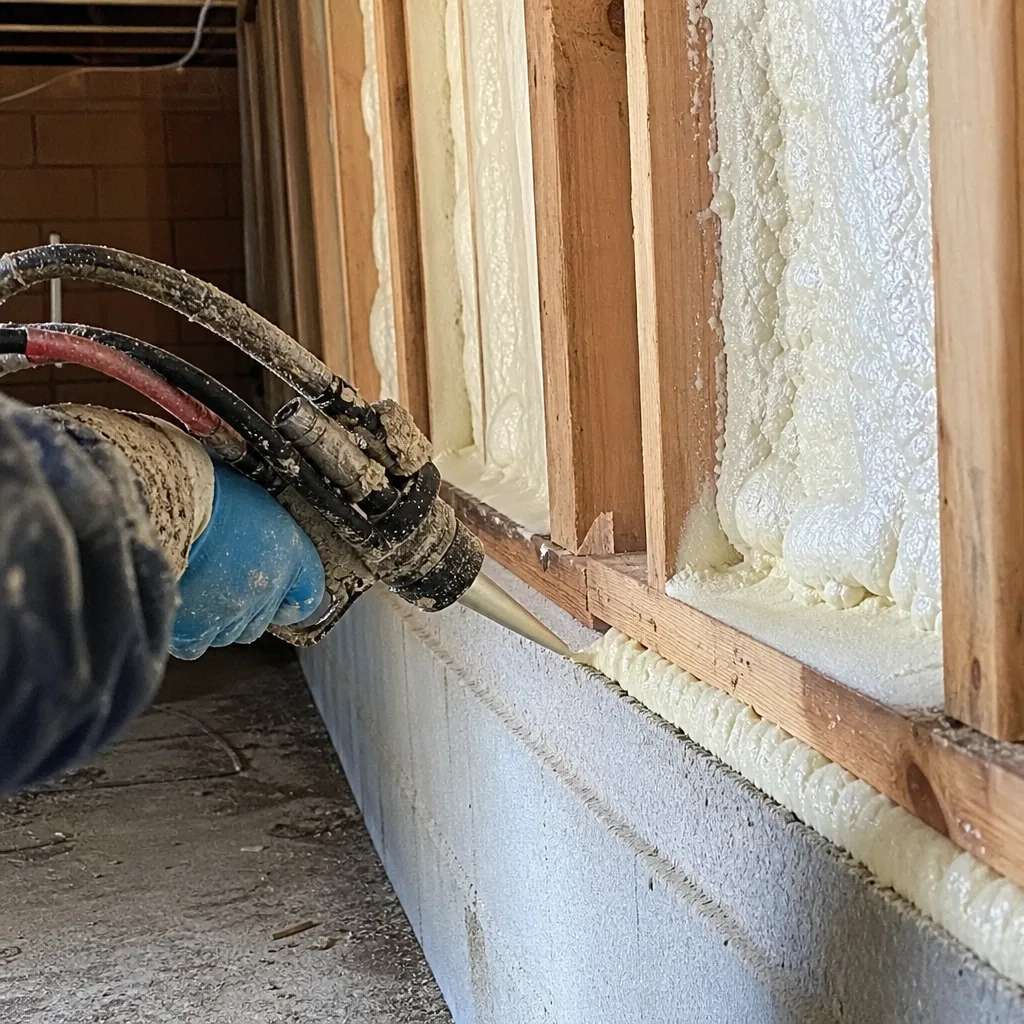
For the flat-roofed and low-slope homes common around March Air Force Base, spray foam earns its keep by sealing the air leaks that let hot attic air drain into the living space. Open-cell foam works well for ceiling-plane applications in this dry climate, while closed-cell adds structural and thermal punch for roof-deck retrofits where there’s no venting to work with. Both stop the stack effect that pulls 110-degree attic air down through gaps around lights, plumbing chases, and partition walls. Details are on our Spray Foam Insulation in March Air Force Base page.
What happens when you call
- 1
A real person answersNo phone trees — you reach a local pro.
- 2
You get an upfront price rangeHonest numbers before anyone is dispatched.
- 3
A background-checked tech heads outLicensed & insured, dispatched right away.
- 4
You approve before work beginsNothing starts until you say go.
Blown In Insulation in March Air Force Base
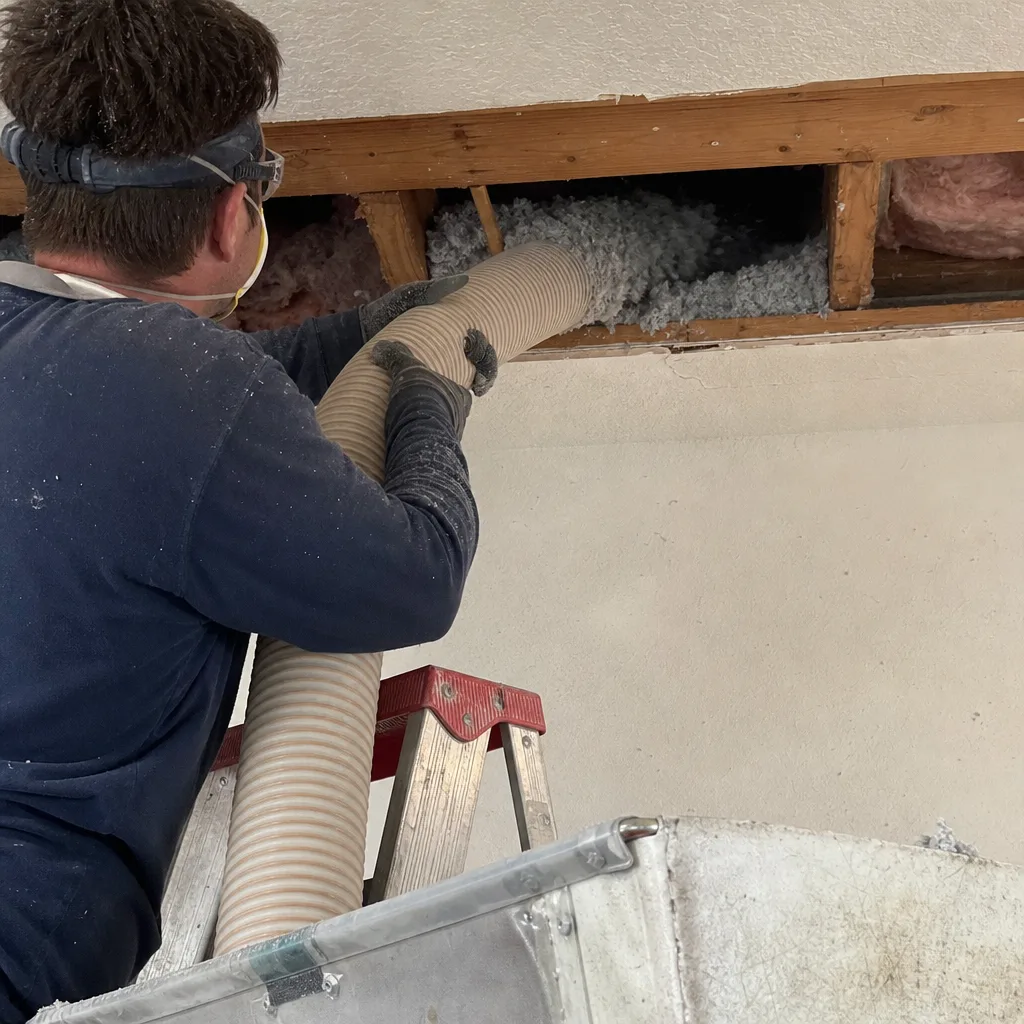
Blown in insulation is usually our first recommendation for March Air Force Base homes because the shallow, awkward attic cavities under flat and low-slope roofs don’t accommodate standard batts well. In a climate where 100-degree days stretch from June through September, loose-fill fiberglass or cellulose lets us fill every gap, corner, and low spot evenly – something rolled insulation simply can’t do in these tight base-era attics. We install both materials daily, and the choice comes down to what your specific attic needs after we measure it. For more on our approach, see Blown In Insulation.
Cellulose Insulation
Signs you need it
Rooms directly under the roof feel noticeably hotter than the rest of the house, even with the AC running.
What it costs in March Air Force Base
Cellulose blown-in insulation in March Air Force Base typically runs $1.50 to $3.10 per square foot installed, depending on attic depth and access.
How we do it
We air-seal penetrations first, then dense-pack or loose-fill GreenFiber cellulose to the target R-value, leveling it across the entire attic floor.
Blown In Attic Insulation
Signs you need it
Your attic has original 1960s or 1970s fiberglass that’s settled flat, and your upstairs is 10 to 15 degrees warmer in summer.
What it costs in March Air Force Base
Blown in attic insulation here falls between $1.10 and $2.80 per square foot, with most 1,400-square-foot base homes landing around $2,000 to $3,900 total.
How we do it
We remove failed material, seal the ceiling plane, then blow new fiberglass or cellulose to R-38 or higher, finishing with a depth check across every corner.
Blown In Cellulose Insulation
Signs you need it
You want a denser, more sound-deadening layer than fiberglass, or you’re upgrading an attic with irregular joist spacing.
What it costs in March Air Force Base
Expect $1.50 to $3.10 per square foot installed for blown in cellulose in March Air Force Base, with GreenFiber as our standard material.
How we do it
We dense-pack walls or loose-fill attic floors with GreenFiber cellulose, ensuring even coverage and consistent R-value throughout.
Loose Fill Insulation
Signs you need it
Your attic has visible low spots or bare patches where old insulation has shifted or settled, leaving ceiling areas unprotected.
What it costs in March Air Force Base
Loose fill insulation in March Air Force Base generally runs $1.10 to $2.50 per square foot, depending on which material and depth we use.
How we do it
We blow loose-fill fiberglass or cellulose across the whole attic, filling low spots and building uniform depth to the specified R-value.
What Blown In Insulation Costs in March Air Force Base
| Item | Typical range in March Air Force Base |
|---|---|
| Blown in fiberglass (attic) | $1.10 – $2.50 per sq ft |
| Blown in cellulose (attic) | $1.50 – $3.10 per sq ft |
| Full attic removal + reinstall | $1,800 – $4,200 total |
How long does blown in insulation last in March Air Force Base heat?
Cellulose and fiberglass both last 20 to 30 years in a dry March Air Force Base attic, though settlement over that time reduces performance. The extreme heat doesn’t degrade the material, but it does make a thicker initial install more cost-effective. Call (844) 820-1136 for an exact quote.
Can blown in insulation help with my AC bill in March Air Force Base?
Yes – it’s the single most cost-effective fix for summer heat gain through ceilings. Most base-era homes we insulate see a 15 to 30% drop in cooling costs during July and August. Estimates are free.
Brands We Service in March Air Force Base
Homestead Insulation Co is authorized to install products from eight manufacturers, and on any given week in March Air Force Base that means Owens Corning fiberglass, GreenFiber cellulose, and Demilec spray foam. Our our brands page covers the full lineup. We stock common materials locally, so most jobs here go from estimate to install within five business days.
Pricing for Insulation Company in March Air Force Base, CA
| Service | Typical range in March Air Force Base |
|---|---|
| Blown in attic insulation (fiberglass) | $1.10 – $2.50 per sq ft |
| Blown in attic insulation (cellulose) | $1.50 – $3.10 per sq ft |
| Full attic removal + reinstall | $1,800 – $4,200 total |
| Blown in fiberglass insulation | $1.10 – $2.50 per sq ft |
| Blown in cellulose insulation | $1.50 – $3.10 per sq ft |
| Loose fill insulation | $1.10 – $2.50 per sq ft |
| Cellulose insulation | $1.50 – $3.10 per sq ft |
| Spray foam (open-cell, ceiling plane) | $2.00 – $4.00 per sq ft |
| Spray foam (closed-cell, roof deck) | $2.50 – $5.50 per sq ft |
What pushes price up in March Air Force Base is attic access: shallow, low-slope roofs mean our crew is often working on their knees in 120-degree attic heat, which takes longer than a wide-open suburban attic. When you call, we give you an upfront number before any work starts – no surprise add-ons at the end of the job.
Neighborhoods We Serve in March Air Force Base
Homestead Insulation Co serves every part of ZIP 92551, including the base housing clusters and the tract neighborhoods that border Moreno Valley. We know these roofs and attics well – many follow the same mid-century footprint, and we can usually quote accurately from roof style and square footage alone. Typical response time for a March Air Force Base estimate is two to three business days.
- Active-duty base housing
- Eucalyptus Hills
- Canyon Springs
- Towngate area
- Sunnyvale Ranch
Service Area – Cities Near March Air Force Base
We work throughout the Inland Empire beyond March Air Force Base, covering Woodcrest, CA to the southwest and Perris, CA to the southeast. We also serve Good Hope, CA and Mead Valley, CA, where the same extreme summer heat and mid-century construction make insulation upgrades just as urgent. If you’re in one of these nearby communities, the crew that insulates March Air Force Base homes is the same one that shows up at your door.
Serving March Air Force Base, CA — Our Local Coverage Area
We’re based in the March Air Force Base area and know this community well. Use the map below to see our service coverage — if you’re nearby, we can almost certainly help.
FAQs About Insulation Company in March Air Force Base
Most March Air Force Base homeowners get an estimate within two to three business days, and installs typically start within a week of approval. During the July heat spike we prioritize attic work because the need is acute. Call (844) 820-1136 to confirm current scheduling.
If you live in active-duty military housing in March Air Force Base, check with the housing office before scheduling. Private homes in ZIP 92551 don’t need special approval for insulation work, and we handle any standard city permits if your project calls for them. We’re familiar with both paths.
That depends on the roof structure and attic depth. For most flat-roofed base-era homes, blown-in fiberglass or cellulose with a radiant barrier is the most cost-effective approach. Where the attic is inaccessible, closed-cell spray foam against the roof deck often makes more sense. We diagnose first, then recommend.
What happens when you call
- 1A real person answersNo phone trees — talk to a local insulation pro.
- 2You get an upfront price rangeHonest numbers before anyone is dispatched. No surprises.
- 3A background-checked tech heads outLicensed & insured, typically within 1-hour.
- 4You approve before work beginsNothing starts until you say go.
What March Air Force Base Customers Say
"Spray foam in the rim joists in the basement. The cold floors above them are gone."
— Travis Doyle"Installed baffles at the soffits so the new insulation didn't block the ventilation, which the previous contractor apparently never considered."
— Alejandro Torres"Work is good and the house is noticeably more comfortable. There was insulation debris left in the hall closet under the attic access that I had to clean up."
— Brandon Park